Ellis Krause · 2 September 2026
Yorkshire's historic wool mills are experiencing a resurgence in traditional weaving practices, fueled by increasing international demand for high-quality British wool products. Mills in the region, particularly around Bradford and Huddersfield, have reported significant growth in orders from overseas markets. This development marks a positive turn for an industry that has faced numerous challenges in recent decades, including competition from synthetics and offshoring.
Revival of Traditional Methods
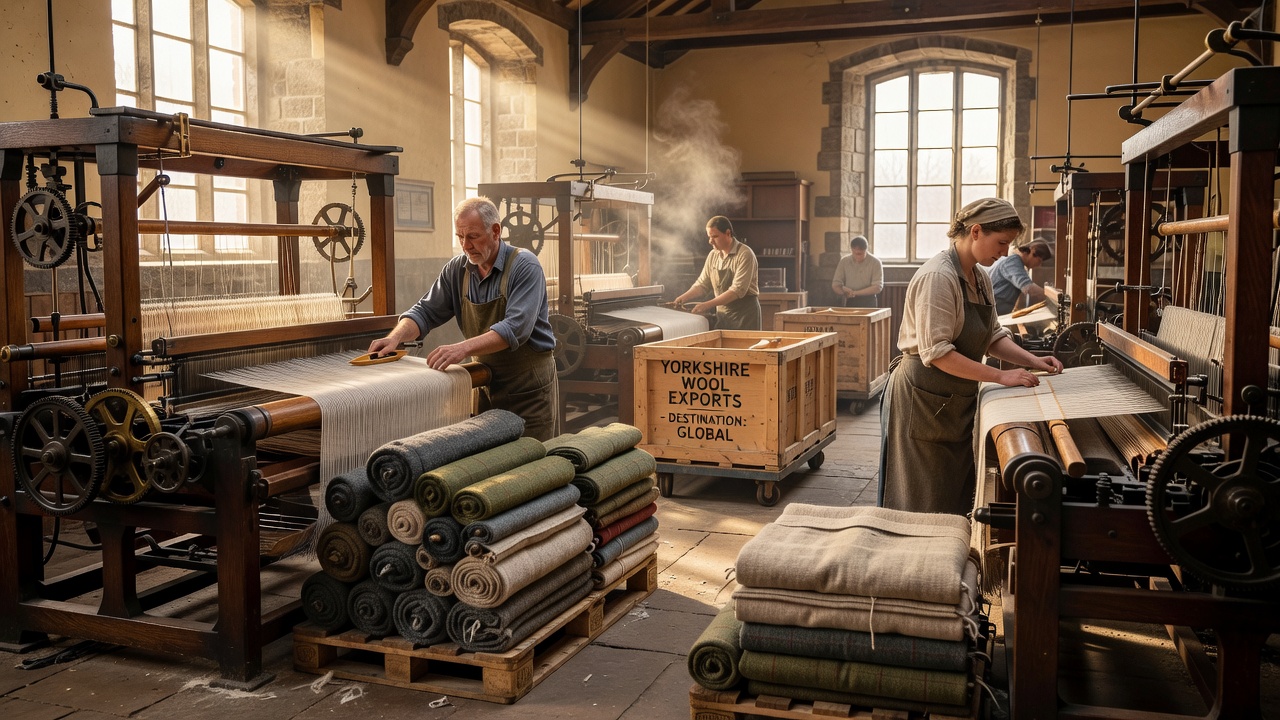
Several mills have invested in restoring vintage looms and training new weavers in time-honored techniques such as worsted spinning and dobby weaving. This revival is not only preserving cultural heritage but also meeting the needs of fashion and interior design industries seeking authentic materials. For instance, one mill in Keighley has doubled its workforce over the past two years to handle the influx of commissions from European and American clients. The shift comes after decades of decline due to globalization and synthetic alternatives. Now, consumers are valuing sustainability and traceability, with Yorkshire wool being prized for its durability and eco-friendly production. Artisans emphasize the importance of maintaining these skills, which have been passed down through generations in local families. Additional training programs focus on blending heritage methods with modern quality controls to meet export standards.
Export Growth and Future Prospects
Export figures for woven wool fabrics from Yorkshire have risen by 25 percent in the last year alone, according to industry reports. Key markets include Germany, Japan, and the United States, where demand for luxury home textiles and apparel is strong. Local businesses attribute this to a combination of skilled craftsmanship and effective marketing highlighting the region's weaving legacy. Challenges remain, including supply chain issues and the need for further investment in technology to complement traditional methods. However, optimism prevails as younger generations show interest in learning the craft, ensuring its continuation. Partnerships with design schools are also helping to innovate while respecting heritage practices. Overall, the sector looks set for sustained growth amid rising global appreciation for British wool heritage.